
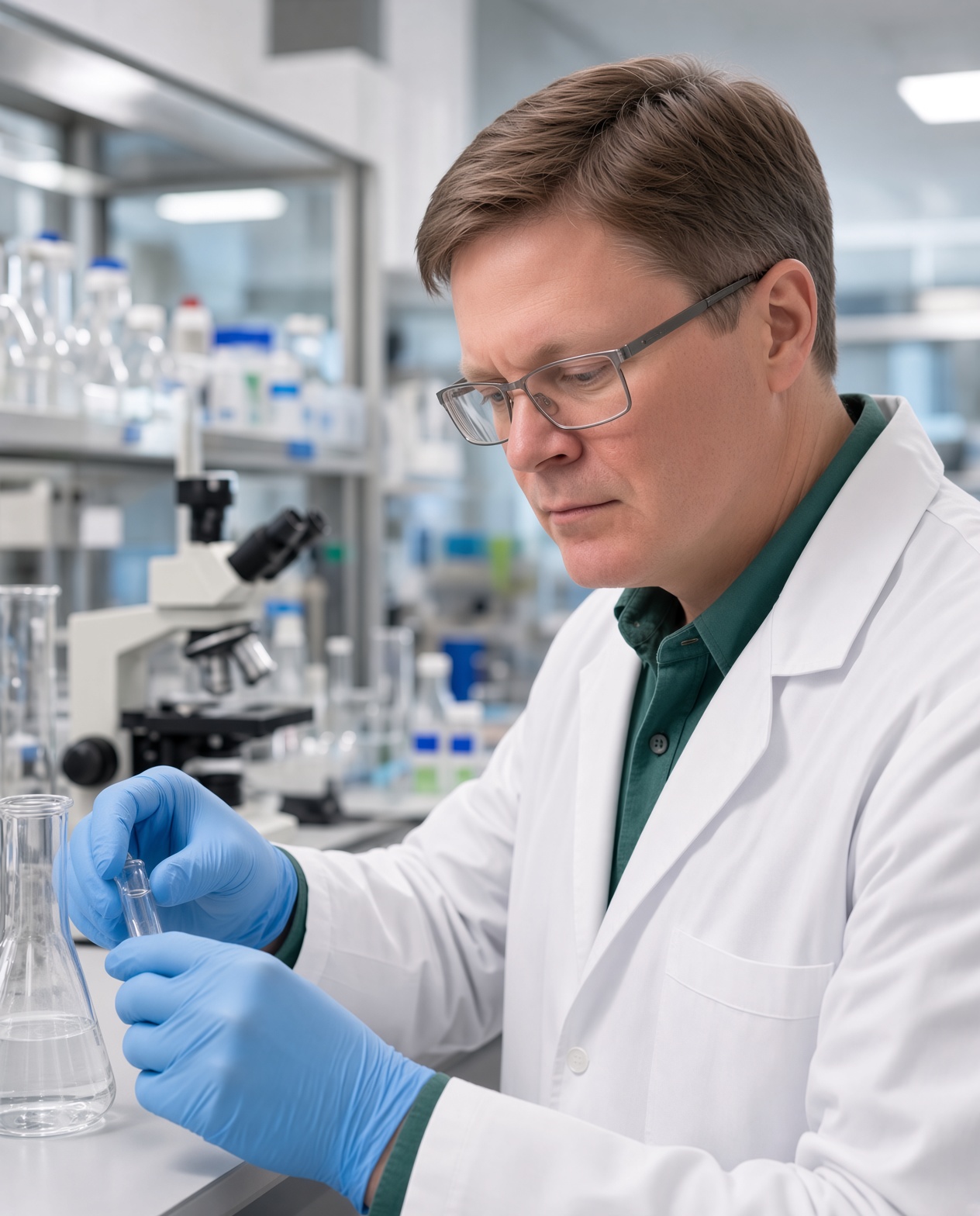
Anthony Wild
Head of Laboratory Sciences
- BSc Animal Science and Pre-Veterinary Medicine, University of Massachusetts Amherst
- MSc Drug Analysis and Toxicology, University of Dundee (in progress)
From a dairy farm on Exmoor to an undergraduate programme in Animal Science and Pre-Veterinary Medicine at the University of Massachusetts at sixteen, Anthony Wild has built a career spanning cell culture, virology, cancer cytogenetics, gene therapy, data analytics and laboratory science.
His laboratory career began in New York, where he managed the central cell culture facility serving five graduate virology research groups at Columbia University. He subsequently moved to Toronto, managing the Cancer Cytogenetics Laboratory at the University of Toronto’s Banting and Best Department of Medical Research, including its Level 3 biosecurity facility. He went on to establish a new cell culture laboratory for the joint University of Toronto and Canadian Red Cross gene therapy programme and worked with the Toronto General Hospital group investigating novel anti-cancer methodologies.
His published research from this period included PCR methodology for detecting endogenous viral sequences in cell lines used in gene therapy research (Allan et al., Leukemia and Lymphoma, 1996), with a particular focus on the safety testing of biological systems intended for therapeutic use.
After two decades leading demographic analysis and data analytics in Toronto, Anthony returned to laboratory science to establish Oxford Biosciences’ in-house laboratory. He designed and equipped the facility, developed its standard operating procedures and quality assurance systems, and has led its laboratory operations since its inception.
As Head of Laboratory Sciences, he directs the analytical work supporting our safety assessments, including preservative efficacy testing, UV-Vis spectroscopy, DPPH radical-scavenging assays, formaldehyde determination and heavy metals analysis. Laboratory data are generated and reported to support the Product Information File requirements of Article 11 of Regulation (EC) No 1223/2009, with systems maintained for regulatory inspection by authorities including the HPRA in Ireland and UK Trading Standards.
He is currently reading for the MSc in Drug Analysis and Toxicology at the University of Dundee, extending his expertise in instrumental analysis and toxicology. Analytical data appearing in our safety reports are generated, calibrated and quality-assured under his supervision.